Article By IndieWire
.png/v1/fill/w_320,h_320/file.jpg)

Finally there’s something that makes Netflix look weak, studios can’t touch, and leaves algorithms clueless: Independent film is turning distribution into the performance.
Streaming spent a decade engineering friction out of viewing; this strategy puts it back. One night only, VHS or nothing, hours in line: Presence is the product.
Dead Format, Live Audience
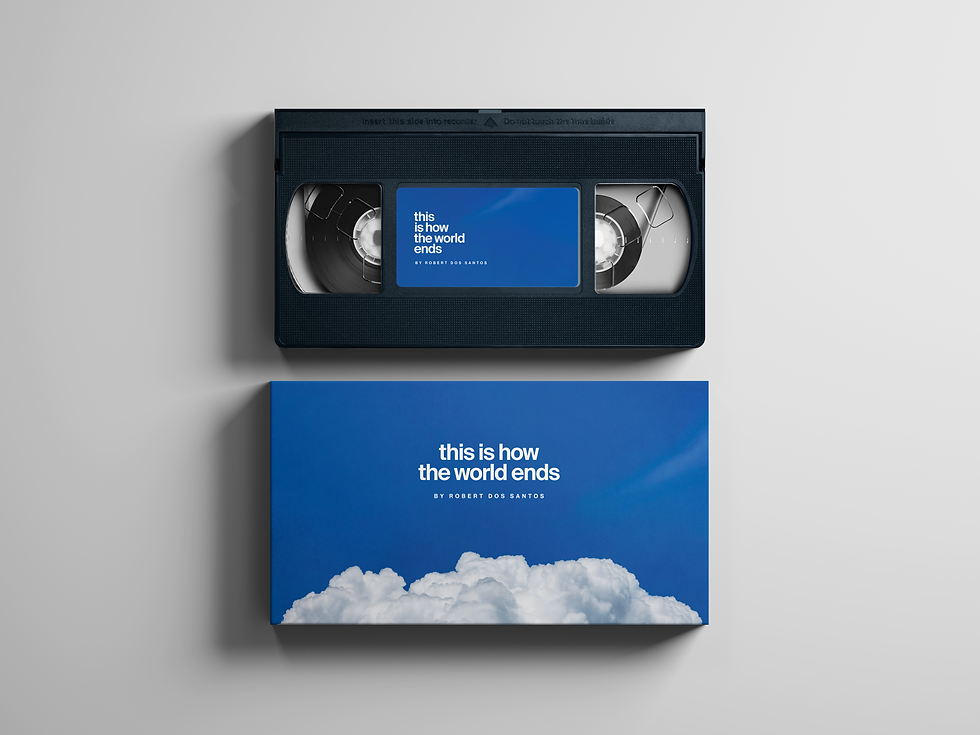
Here’s one example: On June 7 (which was, improbably, National VCR Day), South African filmmaker Robert dos Santos released the VHS-only “This Is How the World Ends,” a film about two siblings finding each other as AI forces the end of humanity. There’s also a soundtrack — on vinyl, of course.
It’s a case of form meets function, with VHS as a defiantly anti-AI format. “The message that goes out through the film is the message we’re putting into the way we’re releasing it,” dos Santos said.
The messaging even comes at the expense of the film: VHS means image quality degradation and frame crops, and it was shot in high definition (on an ARRI Alexa, which didn’t exist when VHS manufacturing ceased in 2006).

Based in Capetown, dos Santos has received VHS preorders from all over the world. Two pressings have sold out and he’s talking with VHS Haven in the US to help with fulfillment. Someone in Malta wants two tapes and an album, but postage would be $160.
Estimating that VHS sales alone will cover 15%-20% of the film’s budget, he plans to upend the order of distribution: VHS, followed by DVD and Blu-Ray, with theatrical to follow. Streaming takes the old VHS spot at the back of the line.
“The people pre-ordering really, really care about film,” he said. “If you don’t care about film, you’re not going to buy a VHS in the first place. Cinema would be the next rung of the ladder.”

The Line Is the Point
Here’s another: I was in Portland last month for Cinema Unbound, the Portland Art Museum’s Center for an Untold Tomorrow fundraiser (aka PAM CUT). While walking to the farmer’s market at barely 8 AM, we saw a line snaking down the block.
What the hell got hundreds of Portlanders out of bed so early on a Saturday morning? The Criterion Mobile Closet, of course.
Criterion Closet Picks is the beloved YouTube series in which the world’s finest filmmakers and actors select their favorite films at Criterion’s New York offices. The Criterion truck is a pilgrimage that makes house calls. Parked across from the Portland Art Museum, its line began to form around 5 AM. The Mobile Closet opened at 11 AM.
I stopped to talk with some of the faithful and found filmmakers, cinephiles, young people, not-young people, a man who owned over 4,000 DVDs, and others who didn’t have a player (yet).
This is who they weren’t: complainers. Everyone was happy to stand in a spiraling line with an uncertain sense of when it would finally be their turn because the line itself, in some sense, was the point.
Criterion president Peter Becker demonstrated this in real time. He spent the day working the line, answering questions, encouraging everyone to connect — and above all, talking about movies. The masters of European, Japanese, Mexican, and Hong Kong cinema, why it matters, and how much it meant to him that everyone was there.
Then he moved to the next section and did it all over again. It was less a marketing appearance than a kind of pastoral act.
Criterion is now exploring the truck’s presence at events tied to food, music, travel, and fashion because it turns out the audience for this experience isn’t limited to Criterion fans. It’s anyone who wants to be inside something that means something.
A Former Sex Club, Obviously
Criterion also programmed three films that weekend at PAM CUT’s Tomorrow Theater, which is a former sex club now transformed into a vital single-screen experience. Every screening and event is a one-night stand.
The programming centers on rep house selections paired with book clubs, knitting societies, drinking games, or creative collective collabs. There are filmmaker Q&As, custom-built smell-o-visions (upcoming: “Parasite”), and live scores. It’s impossible to replicate what happens there at home and its per-screen average is among the highest in the country.
All of this is the brainchild of PAM CUT director Amy Dotson, who cut her teeth at IFP (and was once Harvey Weinstein’s assistant). She also oversaw the Cinema Unbound fundraiser, which shared no DNA with the rubber-chicken circuit.
Cinema Unbound honorees ranged from the James Beard-nominated chefs who catered the extraordinary Indonesian dinner to comedian Maria Bamford. Each table had themed objects aligned with the honorees. From the clappy hands to pom-poms and friendship bracelets, everything was cheap, cheerful, and interactive.
Energy was so high that when the fundraising portion arrived, Dotson started by asking who could give $25,000; four could. She worked her way through the denominations with the energy of a true believer. By the time she identified the dozens of people who could pledge $150, the museum ballroom felt like a rally and PAM CUT had raised over $250,000.
You Mean It or You Don’t
Shifting from content to experience is the perfect hedge against AI. It could point to a genuine path to develop audience, or it could become the next thing Xeroxed and diluted into irrelevance. However, there’s an easy litmus test: The moment it becomes technique rather than expression, it fails.

VHS is a clever hook, but dos Santos chose it because his film is about what gets lost when human imperfection is optimized away. Separate the format and the argument and you have a gimmick.
Becker has spent his professional life extending a curatorial mission. When he talks to people who have been waiting for six hours, he’s not performing enthusiasm for a brand. He’s dedicated to the idea that certain films matter and that people deserve access to them. The line forms because they can tell the difference.
Dotson designed the PAM CUT fundraiser to feel warm. It did, because she is. The Tomorrow Theater, rehabbed brick by brick in a city she chose to serve, operates on the same logic — including the decision that screenings are one night only. By any conventional calculation that’s bad business; by her calculation it’s the only one that makes sense.
Way before any of these examples, independent film’s original claim on the culture was that it answered to the work rather than to the market. We all know what happened next: Miramax proved that authenticity could be a valuable commodity, the awards machinery kicked in, and we had a minor-league version of the studio system.

While Criterion is looking to extend its reach and Dotson has considered whether the Tomorrow concept could apply elsewhere, success doesn’t tie to scale. The model is binary: You mean it or you don’t, and audiences — particularly those who show up for this kind of thing — know immediately which one it is.
The YouTube-developed filmmakers are on a similar path, building genuine creative authority with specific communities through years of showing up in public and earning trust. That relationship also fails the moment it gets treated as a pipeline.
None of this saves independent film, which faces structural pressures untouched by a sold-out VHS run. But it points away from the mentality that indie film survives by competing with the studio system on the studio system’s terms.
The conviction underneath all of it is the same: that film is worth showing up for. That’s what fills rooms. And filled rooms, it turns out, are where independent film has always been most itself.
----------------------
Originally Published by IndieWire
Written By Dana Harris-Bridson
Find the This Is How The World Ends movie at: www.thisishowtheworldends.com

keonhacai5 mình thấy nhiều người nhắc nên tò mò bấm vào xem thử giao diện thế nào. Mình không có thời gian ngồi mò từng mục, chủ yếu lướt qua cách họ sắp xếp thông tin cho dễ nhìn thôi. Ấn tượng đầu là bố cục khá thoáng, các phần nội dung chia theo từng khối rõ ràng nên kéo xuống không bị “ngợp”. Mấy bảng thông tin dạng cột nhìn gọn, chữ không quá rối nên liếc nhanh vẫn nắm được ý chính. Menu cũng đặt chỗ dễ thấy, bấm qua lại giữa các mục khá mượt, không phải tìm vòng vòng. Nói chung kiểu trình bày này hợp với người chỉ muốn xem nhanh, vì các khối nội…
Bài viết này khá hữu ích, cảm ơn bạn đã chia sẻ. Mình cũng hay xem thống kê XSMB mỗi ngày nên tiện tay gom lại thành một trang tổng hợp để tra nhanh khi cần. Mình vừa lưu bài này lại để đọc lại sau. Ai quan tâm dữ liệu cập nhật theo ngày thì ghé thử https://soicauxsmbpro.theblog.me/pages/9916207/page_202608030027
Mình chơi xổ số chủ yếu để giải trí nên không kỳ vọng phải trúng, cứ xem như mua chút niềm vui rồi chọn vài số theo linh cảm. Hồi trước mình cũng hay nghe người ta bàn về lô rơi, lô gan hay soi theo giấc mơ, nhưng làm theo một thời gian mới thấy nếu không ghi lại thì rất dễ bị cảm xúc dắt mũi. Giờ mình tập ghi chú những con hay đánh kèm lý do, để sau này nhìn lại xem có đang tự gán quy luật cho may rủi không. Thỉnh thoảng mình vẫn xem dự đoán xsmb để có thêm góc nhìn, nhưng chỉ coi như tham khảo cho vui chứ không phải…